The Layag Ilaya Research Journal is the official, peer-evaluated research publication of Ilaya Barangka Integrated School in Mandaluyong City. It publishes original, school-based studies authored by Senior High School students under faculty mentorship — research that begins with real problems in the school and community and ends with evidence that can guide action.
Mission & Vision
Mission
To develop disciplined student researchers by publishing rigorous, community-anchored studies that improve school life, strengthen public services, and cultivate a culture of inquiry at Ilaya Barangka Integrated School.
Vision
A generation of Ilaya Barangka learners who treat research as a way of serving — navigating from questions to evidence to action, guided by heritage and driven by inquiry.
Student-led field research on environment, infrastructure, safety, and campus life
Descriptive, correlational, evaluative, and developmental studies with community application
Research completed under Project I-SEARCH and defended before an evaluation panel
The Story Behind the Name
Layag
Layag — the sail. In our waters, the sail is not decoration; it is the instrument of intention. To raise a layag is to declare that you are going somewhere — that drifting is not enough. Our ancestors crossed open seas on balangay boats powered by woven sails, reading stars and currents long before instruments existed.
Ilaya
Ilaya — the upstream, the interior, the direction away from the sea and toward the source. In many Philippine communities, ilaya names the inner barangay — the home ground. It is also, of course, our home: Barangka Ilaya, the community this school serves.
Put together, Layag Ilaya holds a beautiful tension: the sail that longs for open water, and the home that gives the voyage its meaning. We do not sail to escape Ilaya; we sail because of it — carrying its questions outward and bringing knowledge back. This journal is our sailing record — proof that from a public school in Mandaluyong, students can navigate toward knowledge that matters.
Paggula
The emergence of an idea
A student notices what others overlook — an overflowing bin, a dark street, a broken door — and a question is born.
Findings leave the classroom and travel — to school leaders, to the barangay, to the city — where they can change what happens next.
Manifesto
“We sail because the questions call us.”
We are the students of Ilaya Barangka — young researchers who look closely at our school, our streets, and our city, and ask: what can be made better?
We believe research is not reserved for the distant expert. It belongs to the student who counts, maps, asks, listens — and refuses to look away.
Every study in these pages began as a question about ordinary life — waste, water, light, safety, time — and became a voyage of disciplined inquiry.
Editorial Board
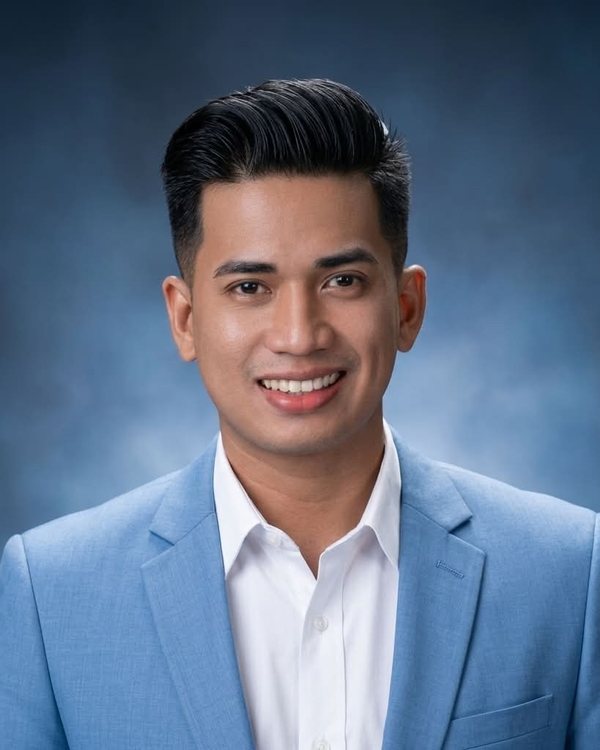
Mr. Franklin D. Garvida
Editor-in-Chief
Senior High School Teacher · Research Manager, Ilaya Barangka Integrated School. Founder of Project I-SEARCH and adviser to all nine studies in this issue.
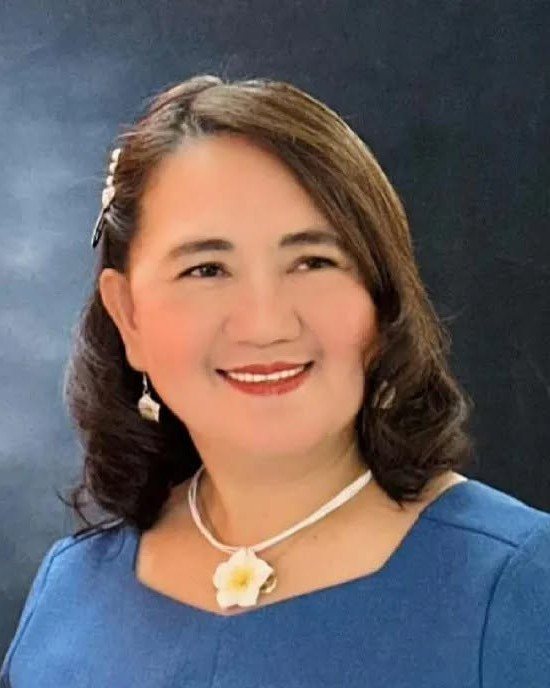
Mrs. Ellalyn A. Abutal
Editorial Adviser
School Principal III, Ilaya Barangka Integrated School.
Ms. Angeline C. Miguel
Associate Editor
Senior High School Focal Person.
Editorial Policies
Scope & focus
The journal publishes original, school-based research authored by students of Ilaya Barangka Integrated School, with priority on studies addressing real community problems — environment, infrastructure, safety, and student life.
Review process
Every study undergoes adviser-guided development, followed by a formal oral defense before an external evaluation panel. Only studies that pass panel review are accepted for publication.
Research ethics
Studies involving human participants require informed consent. Identifiable personal data are anonymized. Field documentation follows ethical photo protocols and barangay coordination where applicable.
Originality & integrity
Submissions must be the original work of the student researchers. Plagiarism, data fabrication, and unauthorized reuse of others’ work are grounds for rejection or retraction.
Generative AI use
AI tools may assist in language refinement, layout, and design under adviser supervision. AI must not be used to generate, alter, or fabricate data, findings, or citations. All AI assistance must be disclosed.
Corrections & retractions
Verified errors are corrected in a subsequent issue or errata notice. Serious integrity violations lead to retraction of the affected article, with the article code marked as retracted.
Publication Information
Publisher
Ilaya Barangka Integrated School (IBIS)
School address
37 Lion's Road, Barangka Ilaya, Mandaluyong City, 1550 Metro Manila
Publication frequency
Annual (one volume per academic year)
Language
English
Format
Print (ring-bound), 44 pages
Cover price
Not for sale — institutional circulation
Issued and confirmed by the National Library of the Philippines.
How to cite this issue: Layag Ilaya Research Journal, Vol. 1, Issue 1 (March 2026). Ilaya Barangka Integrated School, Mandaluyong City. ISSN 3155-5829 (Print), 3155-6353 (Online).
Article Identifier System
Every article in this journal is assigned a unique identifier for citation and archiving:
LIRJJournal code
2026Publication year
V1I1Volume & issue
001Article number
Codes in this issue run from LIRJ-2026-V1I1-001 through LIRJ-2026-V1I1-009. Digital Object Identifiers (DOIs) are not yet assigned; DOI registration is planned for future volumes.
Generative AI Policy
This journal was produced with the assistance of generative AI tools for layout design, copyediting, and visual composition, under the full direction and review of the Editor-in-Chief. All research content, data, and findings are the original work of the student researchers. AI was not used to generate or alter research data, results, or conclusions.
The editorial team gratefully acknowledges the Grade 12 student researchers whose diligence, fieldwork, data gathering, and academic commitment made this inaugural issue possible. We also extend our sincere appreciation to the school leadership, research advisers, teachers, and community stakeholders who supported the conduct of these studies and helped strengthen a culture of inquiry at Ilaya Barangka Integrated School.
This first volume is offered both as a record of student research and as an invitation to continue using evidence-based inquiry in the service of safer schools, cleaner environments, and healthier daily life.